
Key Marketing Questions To Ask A Dallas Listing Agent
May 7, 2026
May 7, 2026
If you are getting ready to sell in Dallas, one big question matters more than most: how will your agent actually market your home once it hits the market? In a market where Dallas County homes averaged 56 days on market in March 2026 and inventory sat at 4.2 months, a listing still needs the right pricing, presentation, and exposure to stand out. The right interview questions can help you spot the difference between a basic listing process and a strategy built to attract serious buyers. Let’s dive in.
Selling a home in Dallas is not just about getting into the MLS. Dallas County’s March 2026 market update showed a median sales price of $375,000 for the month, with homes taking an average of 56 days to sell. That kind of timeline tells you marketing quality still matters well after launch day.
For higher-end homes, the need for a thoughtful plan can be even greater. In the DFW million-dollar segment, 5,485 homes sold between November 2024 and October 2025, with an average of 61 days on market and 6.5 months of inventory. If your home is in areas like Highland Park, Lakewood, University Park, or nearby central Dallas neighborhoods, you want to know whether an agent can tailor the approach to the price point and buyer pool.
That is why your listing interview should go beyond commission and availability. You want to learn how an agent thinks, how they make decisions, and how they would position your home for the local market.
A strong Dallas listing agent should be able to explain how your home fits into its immediate market. Buyers do not shop every neighborhood the same way, and homes in central Dallas often compete on a mix of location, condition, design, and lifestyle fit.
Ask questions like these:
These questions help you hear whether the agent has real neighborhood knowledge or is giving you a generic answer. A strong response should sound specific to your area, your price point, and your home’s condition.
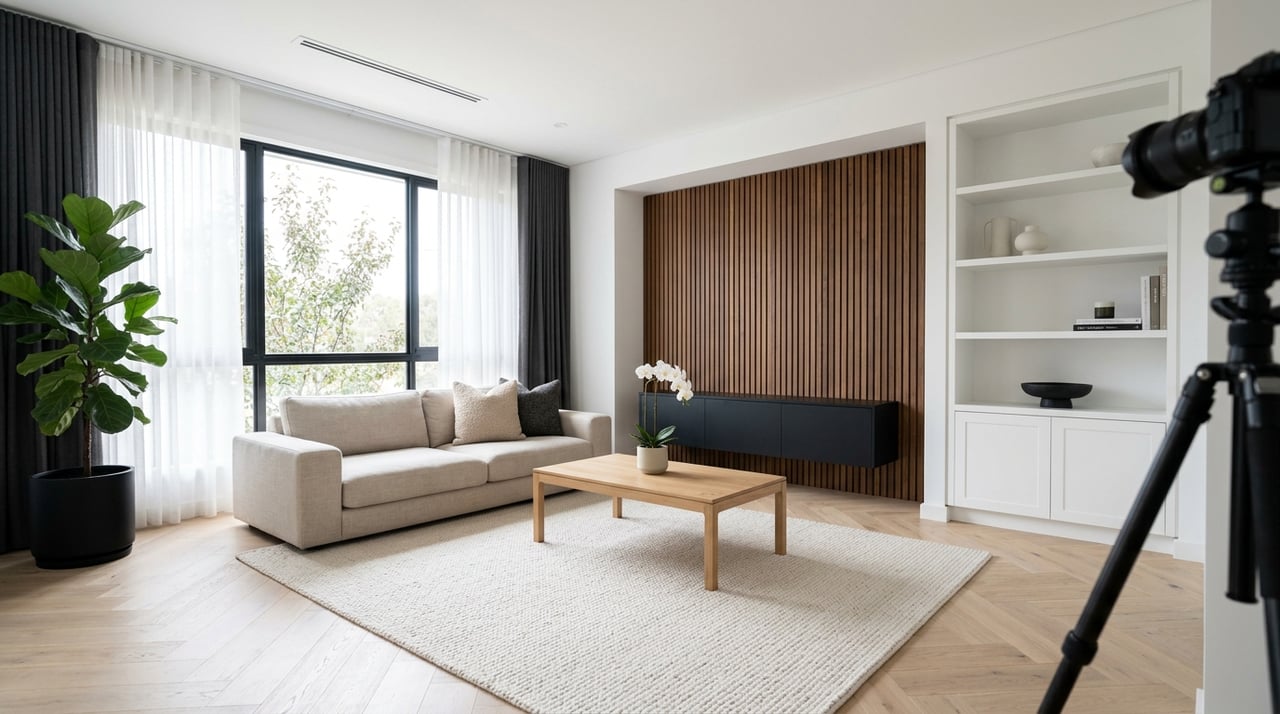
Presentation matters because buyers often make their first decisions online. In 2025 home search data, 43% of buyers first looked online for properties, and 83% of internet-using buyers said photos were a very useful website feature. Floor plans and virtual tours also ranked highly.
That means your pre-launch plan deserves close attention. You should know exactly what the agent recommends, who coordinates it, and what level of effort is expected before the photographer arrives.
Staging continues to influence buyer response. In NAR’s 2025 staging survey, 83% of buyers’ agents said staging made it easier for buyers to visualize the home as their future home, and 49% of sellers’ agents said staging reduced time on market.
Ask these questions:
These are smart questions because the same survey found that the most common seller recommendations were decluttering, cleaning the entire home, and improving curb appeal. It also found that living rooms, primary bedrooms, and kitchens are among the most important spaces to stage.
Not all listing media packages are equal. Buyers’ agents said photos, staging, videos, and virtual tours were important listing components, which makes it worth asking for details instead of assumptions.
Ask these questions:
You are looking for clarity here. A polished agent should be able to explain what is included, what is recommended for your home, and why those choices support the sale.
A strong listing strategy should not stop at uploading the home online. Buyers use multiple sources while searching, including real estate agents, mobile devices, open houses, online video sites, and yard signs. That means an effective plan usually blends digital exposure with in-person opportunities.
Ask the agent to walk you through the full distribution plan. If the answer sounds vague, that is useful information.
Ask questions like these:
A thoughtful answer should explain not just where the home will appear, but how each channel supports the launch. In many cases, the best strategy is not one channel over another. It is a coordinated rollout.
In Texas, advertising rules are a real part of the listing process. TREC defines advertising broadly to include social media, email, text messages, signs, brochures, websites, and more. TREC also requires the license holder or team name and the broker’s name in a readily noticeable location, with the broker’s name at least half the size of the largest contact information.
That makes compliance a practical question, not a technical one. Ask:
These questions show whether the agent runs a professional process. They also help you understand how carefully your home will be represented across different channels.
Marketing and pricing work together. If a home launches at the wrong price, even strong visuals and broad exposure may not create the response you want.
Dallas-Fort Worth homes sold at 92.0% of original list price on average in Texas REALTORS’ 2025 year-in-review data. DFW million-dollar homes closed at 93% of original list price. That makes it reasonable to ask how an agent handles pricing discipline, market feedback, and changes after launch.
Ask these questions:
You want an answer grounded in local competition and real buyer response, not just optimism. A strong listing agent should be comfortable discussing what happens if the first strategy does not produce the right traction.
Once your home is on the market, communication matters. In a market where homes can sit for several weeks, you should not be left guessing about what buyers are seeing and how the campaign is performing.
Ask the agent to define their reporting rhythm before you sign anything. That expectation can shape your experience just as much as the marketing itself.
Ask:
Good reporting often includes showing activity, online traffic trends, buyer feedback, and recommended adjustments. You want to know what the agent watches and what would trigger a change in pricing, prep, or promotion.
Marketing gets buyers interested, but negotiation helps convert that interest into the best possible outcome. Buyers still rely on agents to negotiate terms of sale, and sellers rely on agents to price competitively and sell within a specific timeframe.
This is where experience matters. Once offers come in, your agent should be able to guide you through not just price, but the terms that shape your net proceeds and timing.
Ask these questions:
A strong answer should sound calm, specific, and strategic. You want to hear how the agent balances leverage, timing, risk, and your goals.
By the end of the conversation, you should have a clear sense of whether the agent offers a true marketing plan or simply a listing process. The right fit should be able to explain how they would prepare, present, promote, track, and adjust your listing based on your home and your neighborhood.
In central Dallas, that local context matters. A home in Lakewood may need a different visual story than a townhome near the Park Cities corridor, and a luxury listing may need more deliberate pacing and broader distribution than a move-in-ready home in a lower inventory niche. The best listing interviews make those differences clear.
If you are interviewing agents, do not be afraid to ask detailed questions. The answers can tell you a lot about the level of service, strategy, and professionalism you can expect from day one.
If you want a listing plan built around neighborhood knowledge, elevated presentation, and measurable marketing, connect with Christi Weinstein to start the conversation.
Stay up to date on the latest real estate trends.
Christi Weinstein is dedicated to helping you find your dream home and assisting with any selling needs you may have. Contact her today to start your home searching journey!
GET IN TOUCH TO LEARN MORE

Christi Weinstein
8111 Preston Road, Suite 725 Dallas, TX 75225