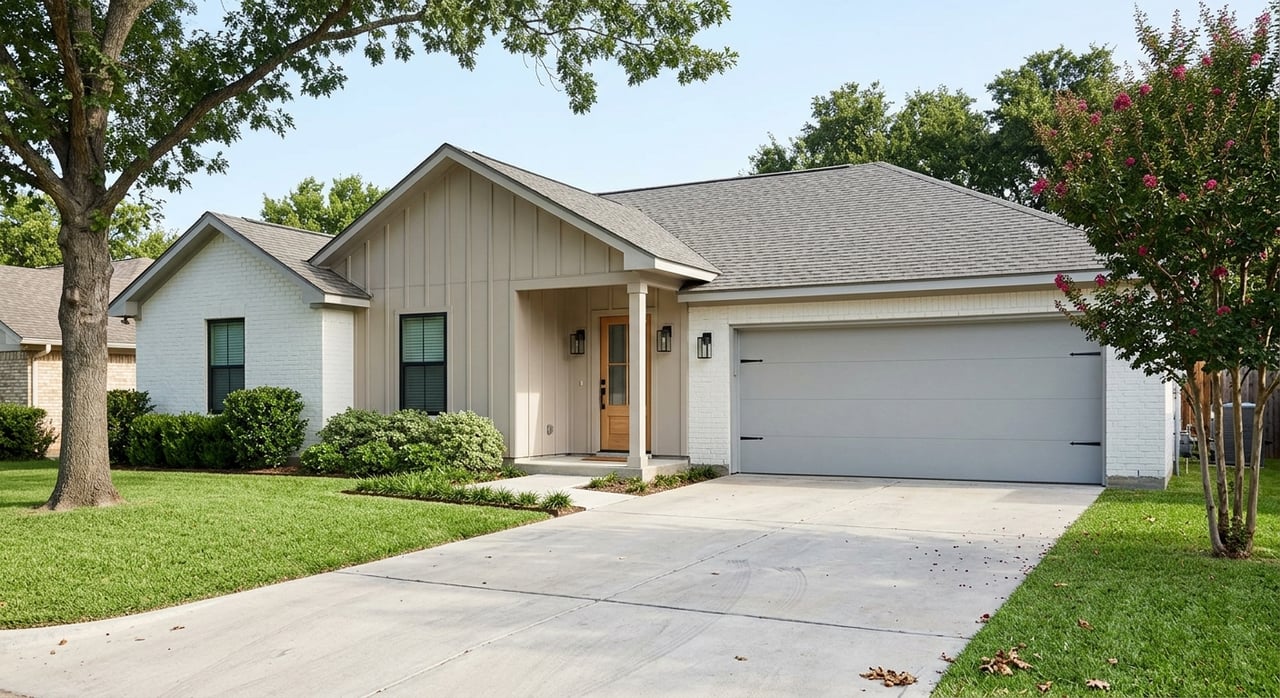
East Dallas vs Suburbs Homes for Move-Up Buyers
April 2, 2026
April 2, 2026
Wondering whether your next home should keep you close to the heart of Dallas or give you more space in the suburbs? If you are a move-up buyer weighing East Dallas against North Dallas suburbs, the decision often comes down to how you want to balance price, character, commute, and day-to-day lifestyle. The good news is that each option offers a distinct advantage, and when you understand the trade-offs, the path gets much clearer. Let’s dive in.
For many move-up buyers, price is the first reality check. In this Dallas-area comparison, East Dallas neighborhoods like Lakewood and the M Streets sit in a very different pricing tier than Plano, Richardson, and Frisco.
According to recent market data, Lakewood has a median sale price of about $1.6 million and the M Streets sit around $976,000. By contrast, Plano is around $485,000, Richardson is about $440,000, and Frisco is roughly $620,000. That spread is important if you are deciding how much of your budget should go toward location versus square footage.
Price per square foot tells a similar story. Lakewood and the M Streets command a major premium, while Plano, Richardson, and Frisco offer lower costs per foot. In simple terms, East Dallas often asks you to pay more for close-in access, architectural identity, and neighborhood character.
Move-up buyers are not just shopping for a bigger house. You are also choosing a setting, a lot pattern, and a style of living that will shape your daily routine.
Lakewood stands out for its historic feel and architectural variety. The City of Dallas conservation district information for Lakewood describes an area shaped by preservation, with homes that include French Eclectic, English Tudor, Colonial Revival, and Spanish Eclectic styles.
That variety is a big part of the appeal. You may find cottages, larger estates, and lots that vary meaningfully from one pocket to the next. The trade-off is that older homes can come with more maintenance needs, and conservation district rules may affect how easily you can change or expand a property.
The M Streets are more tightly defined. The architectural history published by the M Streets area association notes the neighborhood’s strong Tudor Revival identity and original lot planning around roughly 60-foot-wide parcels. That gives the area a cohesive look and a very specific charm that many move-up buyers love.
Plano, Richardson, and Frisco feel more subdivision-based and more conventionally suburban. Their housing stock is generally more single-family oriented, with a wider range of lot sizes and a broader mix of older homes, renovations, rebuilds, and newer construction depending on the city.
Frisco leans especially new-home oriented. The City of Frisco’s community overview highlights its variety of housing and notes that it was the first U.S. city to require Energy Star standards for new homes. Richardson and Plano offer more of a middle ground, where you may find established homes alongside updates and rebuilds.
If your routine centers on central Dallas, East Dallas has an obvious location advantage. Lakewood and the M Streets are close-in neighborhoods, and that proximity matters when your week includes downtown offices, city dining, or regular trips across central Dallas.
D Magazine’s neighborhood guides report average commute times of about 27 minutes for Lakewood and 22 minutes for the M Streets and Vickery Place. Those numbers help show why buyers who want a more urban daily rhythm often stay focused on East Dallas.
Suburban access is not one-size-fits-all. According to DART rail service information, Dallas, Richardson, and Plano are part of the rail network, and the Silver Line corridor connects through Plano and Richardson on the way toward DFW Airport.
That gives Richardson and Plano a transit angle that can matter for some households. Frisco, on the other hand, is better understood as the most highway-dependent option in this group. If you are trying to reduce drive time into central Dallas, that can become a meaningful part of the decision.
The best move-up choice is often the one that fits how you want to live, not just what looks best on paper. Price matters, but so do your habits, priorities, and tolerance for maintenance or commuting.
Lakewood tends to appeal to buyers who want White Rock Lake access, trails, established streetscapes, and homes with architectural personality. It works well if you value being near central Dallas and want a neighborhood with a strong sense of place.
The trade-off is cost. You are likely paying a premium for location, character, and setting, and you may also be taking on an older home with upkeep needs. For many move-up buyers, that is worth it, but it should be an intentional choice.
The M Streets are a strong fit if you want a highly recognizable historic neighborhood feel in a tighter urban grid. The appeal is not just the home itself, but the consistency of the streetscape and the preservation of its original identity.
That also means flexibility can be more limited. Buyers are often paying for charm, location, and architectural continuity rather than larger lots or easier expansion potential.
Plano and Richardson are often the practical middle ground in this comparison. They can offer more suburban value, lower entry points than East Dallas, and a broader range of home choices for buyers who want more space without paying a central Dallas premium.
The City of Richardson’s housing analysis points to a market where starter-level inventory is limited, which can reinforce demand among buyers looking for the next step up. Plano’s city housing materials also emphasize ongoing maintenance and renovation, supporting its reputation as an established suburban option rather than a purely new-build market.
Frisco is the most amenity-forward suburban option in this set. The city highlights parkland, trails, shopping, dining, museums, and newer housing features, which can make it attractive if you want a more modern suburban feel.
You should still weigh that against the commute pattern. Frisco is the highest-priced suburb in this comparison, but it remains well below Lakewood in median sale price. For buyers who want newer homes and a suburban daily routine, that can be a compelling balance.
If you want the cleanest possible framework, think of the options this way:
This is why move-up buyers rarely choose based on square footage alone. You are really deciding what matters most to your next chapter: staying close in, gaining more house for the money, reducing commute friction, or prioritizing a newer suburban environment.
If your top priority is central Dallas access and classic neighborhood character, East Dallas usually leads the conversation. If you want more square footage, broader housing options, and a more suburban day-to-day routine, North Dallas suburbs may give you better value.
The right answer depends on how you rank budget, commute, home style, and long-term lifestyle goals. If you want help comparing Lakewood, the M Streets, Plano, Richardson, or Frisco through a local lens, Christi Weinstein can help you narrow the options and make a confident move.
Stay up to date on the latest real estate trends.


Christi Weinstein is dedicated to helping you find your dream home and assisting with any selling needs you may have. Contact her today to start your home searching journey!
GET IN TOUCH TO LEARN MORE
Christi Weinstein
8111 Preston Road, Suite 725 Dallas, TX 75225