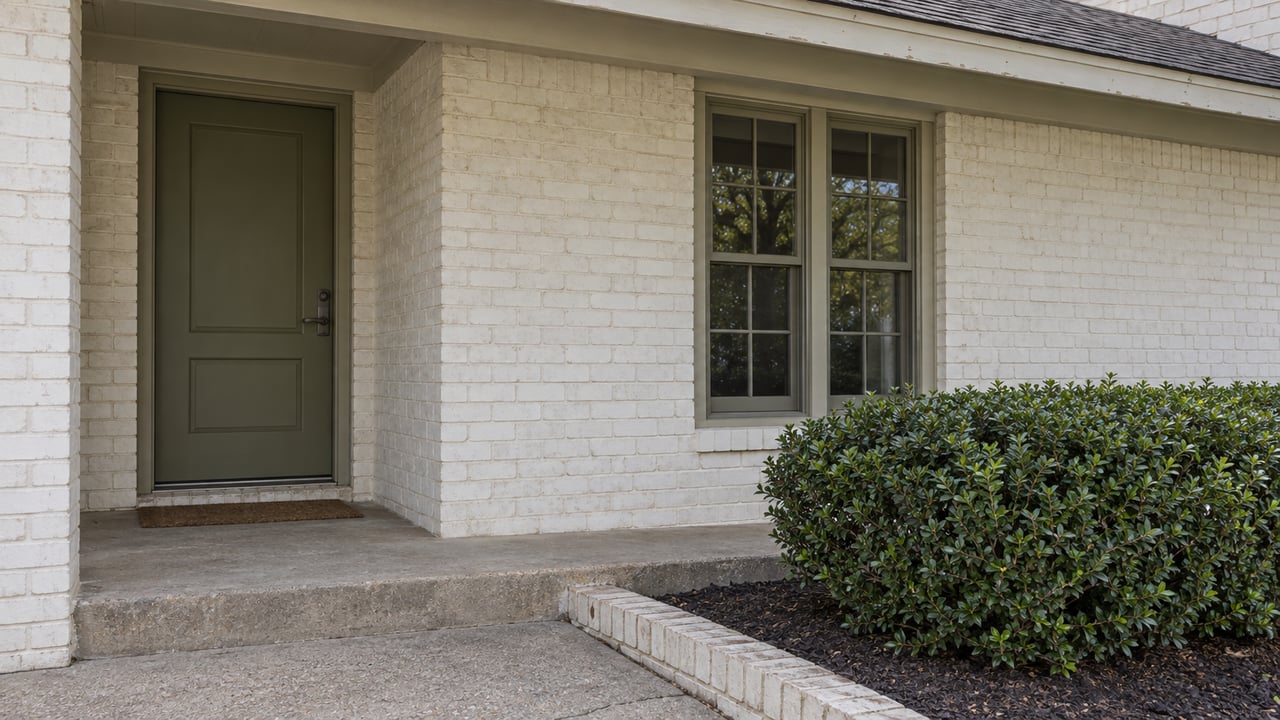
In the M Streets, No Permit Doesn't Mean No Approval Needed
October 1, 2026
October 1, 2026
Most homeowners assume a two-step test for renovation: does the city require a permit, and if not, can I just start work. In the M Streets, that logic runs backward. The City of Dallas's conservation-district guidance says exterior work that may not require a building permit can still require a separate Conservation District Work Review. The building permit and the conservation review are two different systems, and only one of them cares whether the permit desk would normally wave you through.
That distinction is easy to miss because most Dallas neighborhoods don't work this way. Greenland Hills does, and it has since the fall of 2002.
The name M Streets gets used loosely, but the zoning underneath it isn't one blanket rule. The original Conservation District No. 9 was adopted on November 13, 2002, covering roughly 176 acres and more than 900 homes, bounded by US-75 on the west, McCommas Boulevard on the north, Greenville Avenue on the east, and Vanderbilt Avenue on the south. In 2003, M Streets East became its own district, bounded by Skillman Road on the east, Greenville Avenue on the west, McCommas on the north, and Vanderbilt on the south, to protect the original collection of Craftsman bungalows, Colonial, and Tudor Revival houses on that side of the neighborhood.
The practical effect: two houses a few blocks apart, both routinely described as "M Streets," can sit under different conservation ordinances with different amendment histories. Before you plan a remodel, confirm which district your address actually falls in, not which one the listing description implies.
Once you know which ordinance applies, the next surprise is that it runs on its own clock, separate from the building permit process.
| Work not requiring a building permit | Work requiring a building permit | |
|---|---|---|
| Reviewed by | Director of Planning & Urban Design | Same director, routed through the building official |
| Decision window | 10 days after a complete application | 30 days after a complete application |
| If approved | Written approval notice | Application returned to the building official, who can then issue the permit |
| If denied | Written notice stating what must change | Written notice stating what must change before resubmission |
Both tracks are written directly into the city's conservation district code, Section 51A-4.505. The point isn't that one track is faster. It's that a project you assumed was permit-exempt, and therefore approval-exempt, still has to clear this review before you're allowed to start, and the clock doesn't start until your paperwork is complete.
The scope of what counts as "exterior work" is broader than most new owners expect. Marcus Watson, the city's chief planner for historic preservation, has explained that smaller changes, like routine maintenance or paint color, are reviewed by city staff, while more involved or contested projects go through a fuller process. Both outcomes still require the same starting document: a Conservation District Work Review submitted before work begins, regardless of whether the project would ever have needed a building permit on its own.
If you're buying a home where the current owner has already renovated, ask for records of prior review.
The M Streets Conservation District Plan recognizes six original architectural styles: Craftsman, Spanish Eclectic, Neo-Colonial, Minimal Traditional, Ranch, and Tudor Revival, the last of which the Dallas Morning News reports makes up about 65% of homes in the district. The City of Dallas's M Streets Conservation District ordinance gives owners of the other five styles a specific choice when they remodel: stay in the home's original style, or convert to what the ordinance calls High Tudor, but only if the front facade and wrap-around fully commit to that treatment rather than applying Tudor details to the street-facing wall alone.
That single clause explains a pattern you'll notice walking the neighborhood: houses where the front reads as textbook Tudor but the side elevation tells a different story. If you're touring a home with a partial Tudor conversion, ask when the work was approved and whether the remaining elevations were required to follow, or whether the conversion predates the district and was grandfathered in before the rule existed.
The enforcement side of this is not a formality. Code Compliance, the City of Dallas department responsible for these districts, enforces the guidelines, and the Stroll M Streets article says fines for skipping the required review can run up to $2,000 per day, per violation. A building permit application tied to work that needed conservation review first will also sit unresolved until that review is complete. There is no path where the building permit process substitutes for the conservation review, or vice versa.
If you disagree with how staff has interpreted the ordinance on your specific project, the City of Dallas's conservation-district procedures point to the Board of Adjustment as the appeal route, not a second staff review.
Realtor.com's tracked median listing price for M Streets homes was about $957,250 as of June 2026, which puts real money behind a delay measured in weeks rather than days. If your plans include anything beyond interior work, cosmetic touch-ups behind the walls, a few questions during the option period are worth more than a home inspection line item:
None of this is a reason to avoid the neighborhood. The same rules that add a step to your renovation are the reason the streetscape has held its character for more than two decades. It's a cost worth pricing in before you write an offer, not after your contractor is already mid-project.
What's the difference between a building permit and a Conservation District Work Review? They're separate applications reviewed by separate processes. The building permit covers construction code compliance. The CDWR covers whether the exterior appearance matches the district's architectural standards, and it applies even when no building permit is required at all.
Is the M Streets the only Dallas neighborhood with this kind of overlay? No. Dallas currently has 15 conservation districts citywide, including King's Highway, Lakewood, and Vickery Place, each with its own ordinance and its own specific standards.
Can I appeal a denied review? Yes. The city's process allows an appeal to the Board of Adjustment in cases where an applicant believes staff misinterpreted the ordinance.
If you're comparing an M Streets Tudor to something in a neighborhood without this layer of review, that comparison is worth having with someone who's walked other buyers through it before. Christi Weinstein and her team work in these conservation districts regularly and can help you read a listing's renovation history correctly before you write an offer. Request your free home valuation to start that conversation.
This article is general information, not legal, tax or financial advice. Consult a qualified professional about your situation.
Stay up to date on the latest real estate trends.


Christi Weinstein is dedicated to helping you find your dream home and assisting with any selling needs you may have. Contact her today to start your home searching journey!
GET IN TOUCH TO LEARN MORE
Christi Weinstein
8111 Preston Road, Suite 725 Dallas, TX 75225